In-Person EEMS Training Edmonds, WA · Sept 21–23, 2026 Register →
Habitat Analysis

Oil Spills

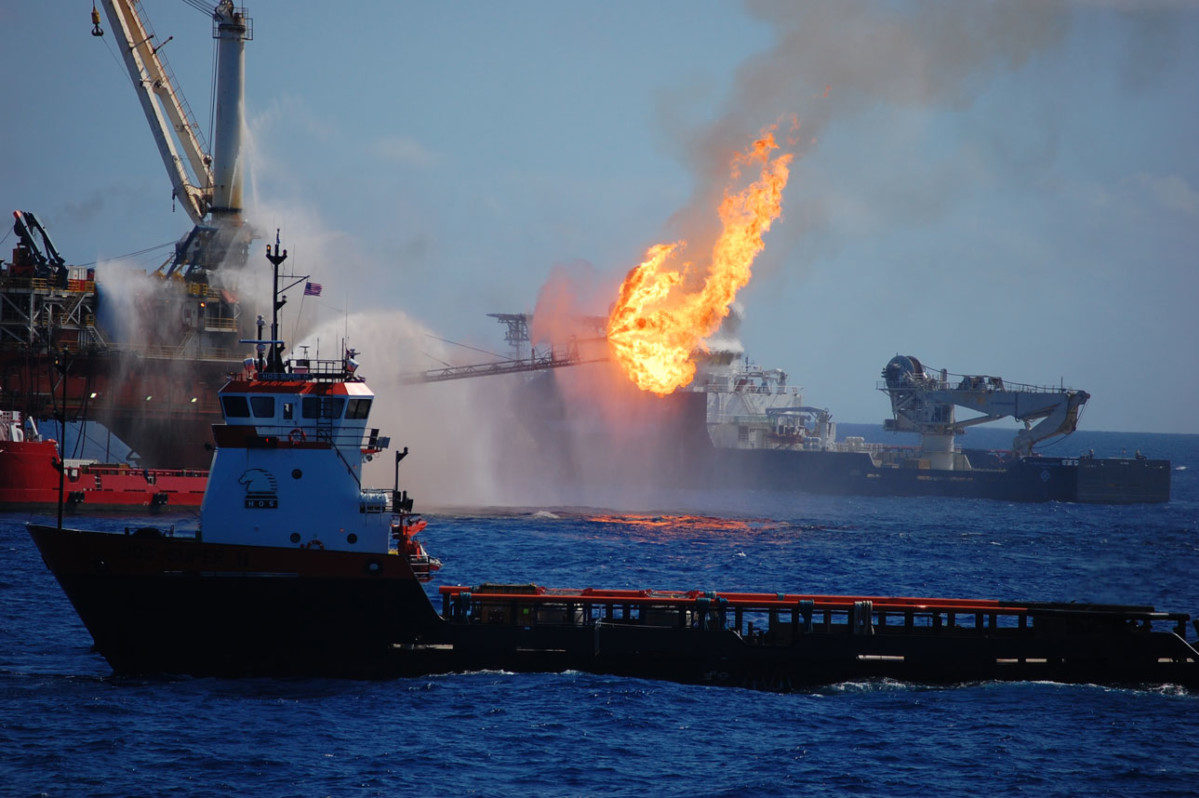
Offshore energy activities can pose significant risk to the environment as demonstrated by Deepwater Horizon and many other historic oil spills.

Oil Spill Modeling for Rapid Response & Planning

When oil reaches water — from pipeline spills to offshore blowouts — rapid, accurate modeling of where it travels and how it behaves is critical for emergency response, environmental assessment, and long-term planning.

Response to oil spill at Deepwater Horizon site (Credit: NOAA). Response to oil spill at Deepwater Horizon site (Credit: NOAA).
Response to oil spill at Deepwater Horizon site (Credit: NOAA)
EEMS Capabilities

EEMS features a Lagrangian Particle Tracking oil spill module that simulates spill trajectories, oil thickness, volume, and biodegradation across the model domain. Users can configure multiple spill locations, track individual particle histories, and generate outputs that feed directly into response plans and species consultations.

Projects

Hebei Spirit Oil Spill, South Korea — Tidal Transport Analysis

Visit source

Following the 2007 Hebei Spirit oil spill, EFDC+ was applied to investigate how strong tidal currents along Korea’s western coast influenced oil slick movement. Simulation results were validated against satellite imagery captured at five intervals after the spill, confirming EEMS’s ability to deliver accurate, field-validated trajectory predictions.
Kodiak, Alaska, USA — Hypothetical Oil Spill Scenario

Visit source

A 3D model of Chiniak Bay and St. Paul’s Harbor near Kodiak, Alaska was developed to simulate the behavior of a hypothetical oil spill. Particles were released simultaneously from two locations, with tidal forcing and variable winds driving their dispersion through this ecologically sensitive bay.

Dam with mountains